The Penny Is Gone. Nobody Passed a Law About Your Change
Your total comes to $8.43. You hand over a ten. What comes back is now, legally speaking, up to the store.
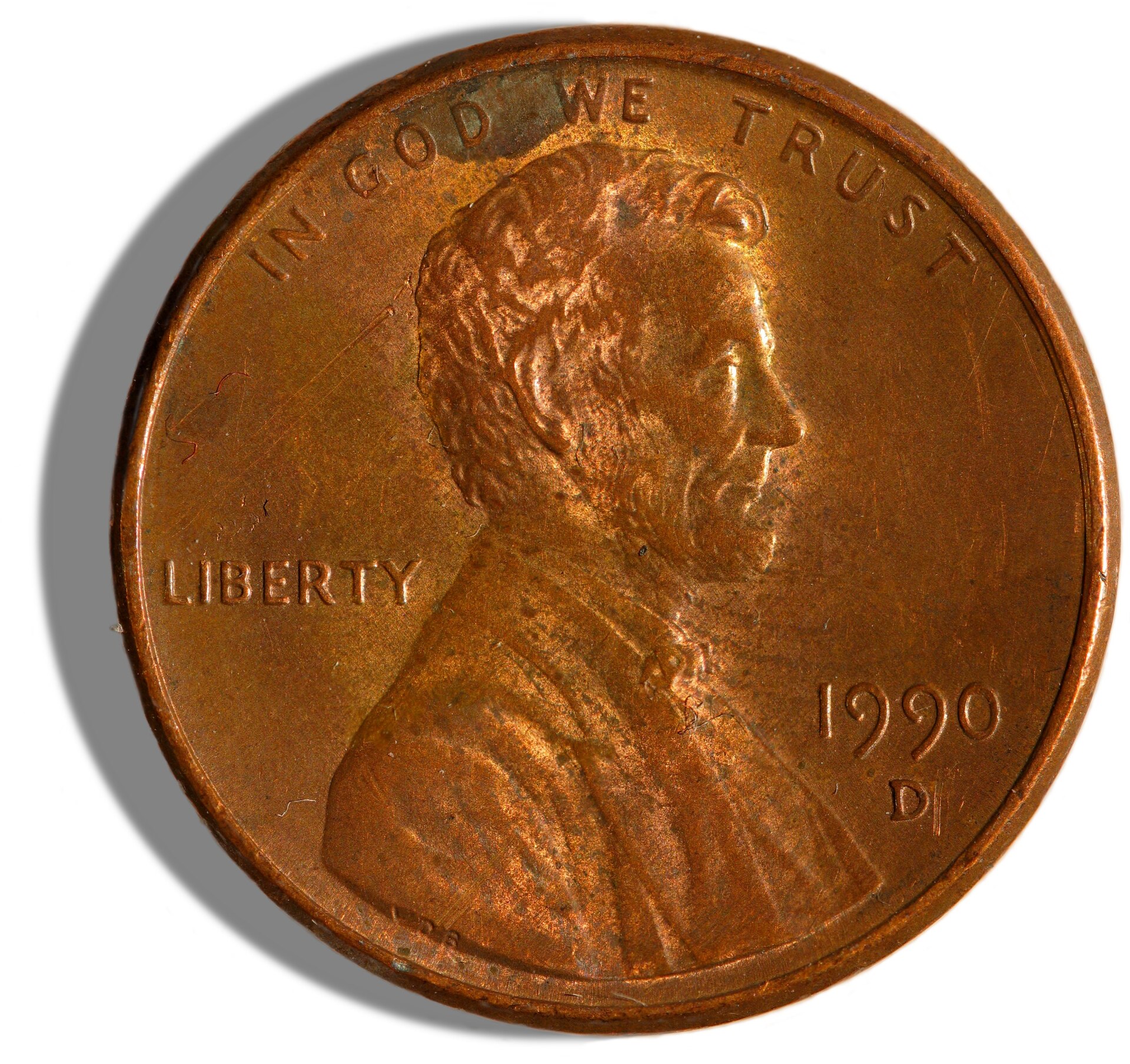

On November 12, 2025, U.S. Treasurer Brandon Beach walked into the Philadelphia Mint and struck the last circulating one-cent coin the United States will ever make. The Mint called it a ceremonial strike. It ended a 232-year run.
Eight months later, here's what Congress has passed about how your cash total gets rounded now that the coin is gone:
Nothing.
What Treasury actually says
Not a law. Guidance. And it's blunter than you'd expect from a Treasury FAQ.
Rounding, the department says, "is a decision to be made by each individual business." As penny supplies thin out, merchants should round cash transactions up or down to the nearest five cents, and they should apply that rounding "in a fair, consistent, and transparent manner." Rounding should touch cash only — pay by card, and you're charged the exact amount.
Read that again as a shopper and it says: the store decides. Read it as a store and it says: you're on your own, please be fair about it.
The penny itself is still money. Treasury is explicit that it "will remain legal tender, meaning it retains its status as an acceptable form of payment," and the Federal Reserve keeps recirculating the roughly 114 billion of them Treasury says are still out there. You can pay with a jar of pennies tomorrow. What's ending isn't the coin's validity — it's the supply of new ones.
Why the coin died
It cost too much to exist. Treasury says the total production cost of a penny climbed from 1.3 cents to 3.69 cents over the past decade. A coin that costs 3.69 cents to make and is worth one cent is a losing trade repeated billions of times, and the Mint projects $56 million a year in material-cost savings from stopping.
Kristie McNally, the Acting Mint Director, marked the last strike this way: "Today the Mint celebrates 232 years of penny manufacturing. While general production concludes today, the penny's legacy lives on."
The bill that was supposed to handle this
There is a bill. It's called the Common Cents Act, and this is where it gets genuinely strange.
As Rep. Lisa McClain (R-Mich.) and Rep. Robert Garcia (D-Calif.) introduced it in April 2025, H.R. 3074 did two things. It ordered Treasury to stop minting pennies. And it wrote a rounding rule into federal law: totals ending in 1, 2, 6 or 7 cents round down; totals ending in 3, 4, 8 or 9 cents round up. Checks, electronic transfers, credit cards, gift cards and money orders were exempt — cash only, spelled out in the statute.
Then the House Financial Services Committee got hold of it. On July 23, 2025 the committee ordered the bill reported as a substitute — meaning it struck everything after the enacting clause and wrote a new bill in its place — by a vote of 35 to 13. That substitute was reported out on September 4, 2025 as H. Rept. 119-235 and placed on the Union Calendar.
We read it. The reported version amends the coin-specification statute, kills the penny, changes what a nickel may be made of, and preserves legal tender status for existing pennies. The rounding section is gone. The word "round" survives only in the bill's own title, which still promises "to require cash transactions to be rounded up or down to the nearest five cents" — a description of a provision the text no longer contains.
The bill has sat on that calendar since September 4, 2025. It has not passed the House. The Senate companion, S. 1525, from Sens. Cynthia Lummis and Kirsten Gillibrand, still carries the full rounding language and is still in committee.
So the coin is gone by executive action, and the rulebook for what replaces it is parked in two chambers, in two different forms, neither of them law.
A discrepancy we can't resolve
On July 13 the American Bankers Association wrote to the House backing the bill, and described it as providing "a clear and practical framework for cash rounding when exact change cannot be provided, while clarifying that checks, electronic fund transfers, credit cards, gift cards, money orders, and similar noncash payment methods are not subject to rounding." The letter also refers to a "required strategic plan and report."
That language matches the bill as introduced. It does not match the substitute sitting on the Union Calendar, which contains neither the rounding framework nor a report requirement. Which text ABA was describing — the introduced version, the Senate bill, or a version we haven't seen — we could not determine from the documents, and we're not going to guess at an answer we don't have.
Where this lands for you
Nickel-level rounding is small. A few cents, either way, on a cash purchase. Over a year of buying groceries with bills, it's noise.
The part that isn't noise is who absorbs it and who doesn't. Rounding applies to cash, by Treasury's own guidance. Cards and checks pay the exact figure. So the only people whose totals move at all are the people paying in cash — and cash use skews toward older Americans, lower-income households, and anyone without a bank account. That's our read of who's exposed, not a Treasury finding, and it's the reason a rule this small is worth having in statute rather than leaving to whoever's running the register.
What This Means for You
If you pay cash: a store rounding your total to the nearest nickel isn't breaking a rule, and a store refusing to round isn't either. There's no federal rounding law. Treasury asks businesses to round fairly and consistently, in both directions — a merchant that always rounds up is doing something Treasury's guidance specifically does not describe.
If you pay by check or card: the rounding question doesn't reach you. Treasury says non-cash payments are charged the exact amount, and every version of the bill that has a rounding rule exempts checks explicitly.
If you run a register: the decision is yours, and Treasury has said so in writing. Nothing stops you from posting your rounding policy at the counter, and given that no law defines it, a sign is the cheapest way to keep the conversation with a customer from becoming an argument.
Sources
- U.S. Department of the Treasury, "Penny Production Cessation FAQs" — source of the "decision to be made by each individual business" language, the legal-tender status, the 3.69-cent production cost and the $56 million savings estimate
- U.S. Mint, "United States Mint Hosts Historic Ceremonial Strike for Final Production of the Circulating One-Cent Coin" — November 12, 2025
- H.R. 3074, the Common Cents Act — bill text (introduced and reported versions)
- H.R. 3074 — all legislative actions, including the 35–13 committee vote and the September 4, 2025 report
- S. 1525, the Senate companion — bill text
- ABA Banking Journal, "ABA shows support for the Common Cents Act" — July 13, 2026
Disclaimer: This article is news and general information only, not legal or financial advice. H.R. 3074 has been reported from committee but has not passed the House or the Senate, and its text could change before any vote.